Rome Beyond the Colosseum: 7 Official Itineraries Most Visitors Miss
Rome's tourism board has mapped seven unusual routes that mix street art, aqueducts and hidden parks — aimed at travelers who already know the famous sights. Here's how to pick one and do it.
FFly2Any Travel DeskFor US travelers planning a trip to RomeChecked against Roma Capitale — Official Tourism, ENIT — Italian National Tourism Board on October 28, 20268 min read
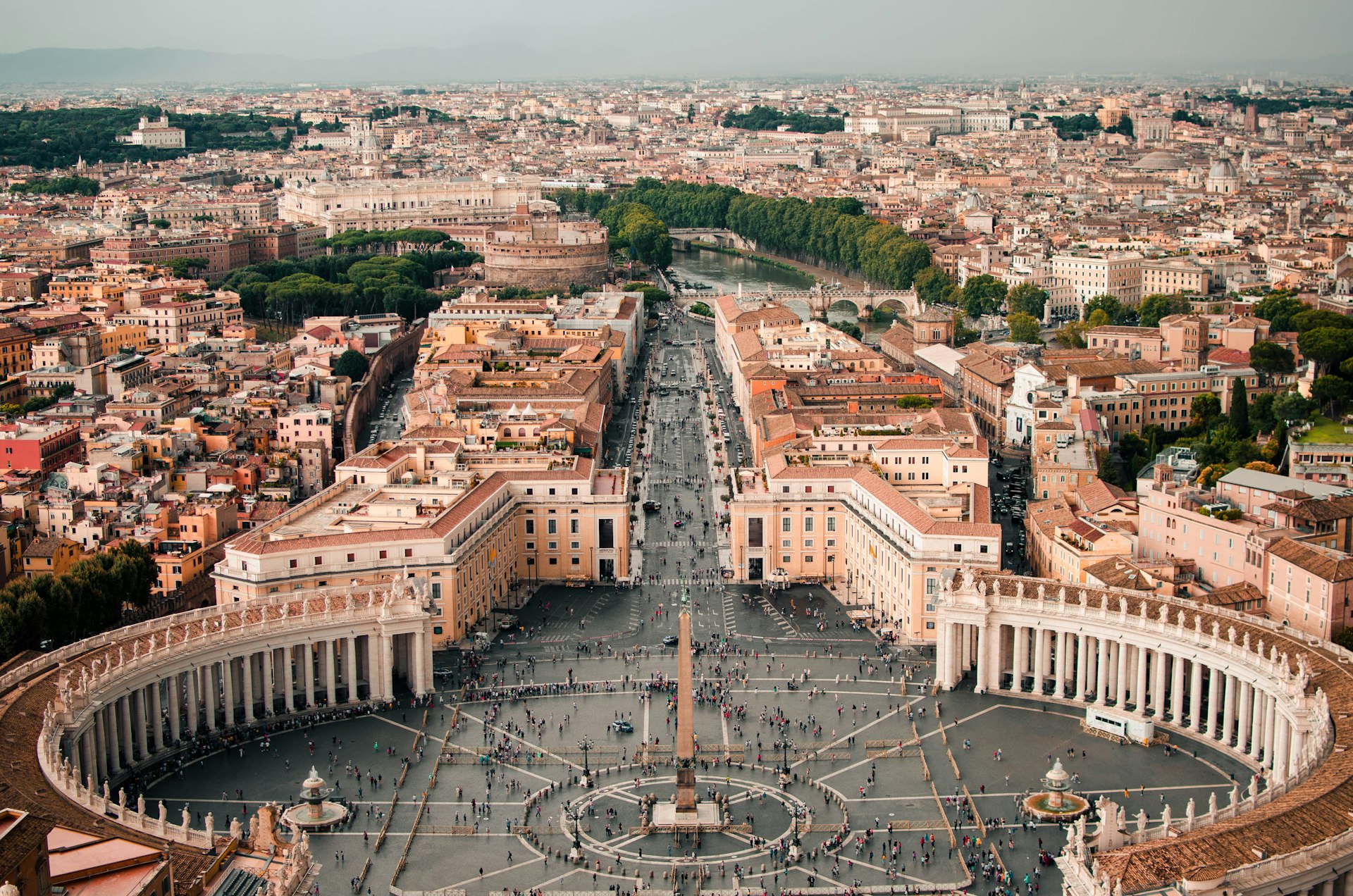
Vatican, Rome
At a glance
Best for
Repeat visitors and curious travelers who already know the headline sights[4]
You already know the Colosseum is the largest amphitheatre in the world and one of the 7 Wonders of the World. What you may not know is that Rome has a project called the Unexpected Itineraries of Rome: seven routes that mix street art, history, biodiversity and culture.[2],[4]
The project exists partly to push back against overtourism — too many visitors packed into a few central blocks. It aims to reduce that pressure by directing people to other parts of the city, and to move past the idea of a '24/48 hours Rome'.[4]
The routes are aimed mainly at young people, curious tourists of all ages and repeat visitors who already know Rome's most famous sights. Rome can be visited in just two days if you know where to go, so if your time is short, plan carefully.[2],[4]
Rome (FCO)
Fly to Rome
Fares we have seen from US cities. Bag fees are shown before you pay.
Rome's official district list runs well beyond the Pantheon-Navona-Campo de' Fiori core. It also includes areas such as Pigneto-San Lorenzo, Ostiense-Garbatella-San Paolo, and Esquilino-Monti.[12]
The Esquilino route is a good first taste. It's an easy walk of about 1.7 km, entirely urban, with plenty of historical, artistic, religious and botanical interest along the way. It's served by the Rome Metro, and you can walk it in either direction — start at Piazza Santa Croce in Gerusalemme and finish at the Ex Acquario Romano, now the House of Architecture.[8]
Along the way you pass the Basilica of Santa Croce in Gerusalemme, which preserves relics of the Holy Cross, the Neronian Aqueduct from 54-68 AD, the Hypogeum of the Aureli from the 3rd century AD, and the Horti Lamiani — today a museum area of over 1,000 square metres on the Esquiline Hill. The route passes through three gardens, including the Gardens of Piazza Vittorio Emanuele II, inaugurated in 1888.[8]
You can add stops along the way: the National Museum of Musical Instruments, the Republican Tombs, Mario's Trophies and the Magic Door. For opening hours and access, check 060608 or turismoroma.it.[8]
Smaller museums, gardens and curiosities worth the detour
Rome's museums hold priceless works of art. The Museo Storico della Fanteria hosts an exhibition dedicated to the great Sicilian artist Renato Guttuso. The MAXXI is the National Museum of 21st Century Arts, designed by Zaha Hadid. And the Centrale Montemartini is a thermoelectric power station dating back to 1912 that was converted into a museum in 1997, displaying sculptures, mosaics and archaeological finds from the Roman era belonging to the Capitoline Museum Collections — one room is dedicated to the three wagons of the train of Pius IX from 1858.[1],[2],[11]
For gardens, the Botanical Garden of Rome sits between Via della Lungara and the Gianicolo Hill. The Janiculum Promenade offers one of the most evocative views of the historic center. The Gardens of Castel Sant'Angelo rise around the castle, created in the 1930s by Attilio Spaccarelli, and are open from 7.00 until dusk — with a play area for children and two large stairways connecting the pine forest, ramparts walk and moat.[3],[5]
A few smaller green corners: the Sant'Alessio Garden on the Aventine Hill, the Garden of Sant'Andrea al Quirinale (a small green oasis in Rione Monti), and the Japanese Garden inside the Japan Cultural Institute in Rome. The multi-sensory garden in the Park of the Rupicole in Torre Maura is Italy's first multisensory garden, created in 2012 — a 3,700-square-metre open-air space where you can experience Mediterranean aromas, spontaneous flowers and exotic plants. It's open every day from dawn to sunset at Via delle Rupicole in Torre Maura.[3],[6]
For something stranger, the Pyramid of Caius Cestius testifies to Egyptian culture in ancient Rome, and the Monumental Cemetery of Verano is a heritage of works of art. If you want a themed walk, there's an itinerary called The ghosts of Rome that follows the restless souls and mysteries of the city's most famous streets and squares.[1]
Walks and routes the official guides suggest
The Unexpected Itineraries of Rome include a route of about 1.0 km and one of just over 6 kilometres. Here are some of them to build a day around.[7],[11]
1
Parco dei Martiri di Forte Bravetta
A simple 1.0 km walk in the Valle dei Casali Nature Reserve. Forte Bravetta was built between 1877 and 1883 and covers about eleven hectares; the route rings the fort along the old defensive moat. Access is free, but booking is compulsory by calling 060608 every day from 9.00 to 19.00, and the maximum is 40 people. It's easily reached on ATAC bus lines 98, 786 and 889. The park is at Via di Bravetta, 739741.[7]
2
Tor Fiscale–Acquedotti
About 4 km, on foot or by bicycle, easily reached on Line A of the Rome Metro. Start at the Casale Museo at the entrance of Via dell'Acquedotto Felice, or join from Via Lemonia or Viale Appio Claudio. The two parks contain the Torre del Fiscale and well-preserved remains of seven Roman aqueducts, including the Claudian and the Felix. Bring comfortable shoes and a water bottle.[10]
3
Almone–Tor Marancia
Just over 6 km, retracing the course of the Almone river, sacred to the ancient Romans and now buried from the Caffarella to the Tiber. One route starts at the Gazometro and enters the Valle della Caffarella; the second winds entirely in the Parco della Caffarella, where the river becomes visible again. You can also follow it in reverse.[11]
4
Osa–Gabii and San Vittorino
In the far territory of Municipality VI, on the eastern slope of the plain around Rome, in a triangle bounded by the Tiburtina, Prenestina and Casilina/Labicana roads. The draw is the extraordinary openings of the Gabii Archaeological Park. Booking is compulsory on 060608. Visits run 9.30 to 15.30, at Via Prenestina Nuova. Dogs are allowed if kept on a leash with a muzzle at hand.[9]
The Esquilino route is an easy route of about 1.7 km, and the Parco dei Martiri di Forte Bravetta itinerary is simple and about 1.0 km long. For big open views, take the Tor Fiscale-Acquedotti route: inside the Parco degli Acquedotti the Claudian Aqueduct reaches a maximum elevation of 28 metres above ground, and from it you can see the Dome of St. Peter's Basilica.[7],[8],[10]
Day trips nearby
Tivoli and its villas can be visited around Rome. The Landriana Gardens are located at Tor San Lorenzo in Ardea, about 30 km from Rome, and extend for 10 hectares.[1],[3]
Along the Roman coast you can see a dune ecosystem that is rarer and rarer along the coasts of the Italian peninsula. The Oasis of Porto sits at the mouth of the Tiber, near Fiumicino, and the Macchiagrande WWF Oasis actually refers to three natural oases in the municipality of Fiumicino.[3]
The Corsa dei Santi 2026 is a ten-kilometre run through the squares, churches and noble palaces of Rome's historic centre.[1]
Practical tips: getting there, timing and what to book
You can get around Rome by taxi, tourist bus, bus, tram, metro, boat, bicycle or shared mobility. The Esquilino itinerary is easily accessible by public transport and served by the Rome Metro lines, and the Tor Fiscale-Acquedotti itinerary is easily accessible by public transport on Line A of the Rome Metro.[1],[8],[10]
Book ahead where it's required. The Forte Bravetta and Gabii visits both require booking by calling 060608; for Forte Bravetta the line is open every day from 9.00 to 19.00, and the group is capped at 40 people. For opening hours and access methods on the Esquilino route, consult 060608 and turismoroma.it.[7],[8],[9]
Some dates are fixed. The Osa-Gabii and San Vittorino itineraries run from 29 November 2024 to 31 December 2025, with visits from 9.30 to 15.30. On 2 February 2025 there's a guided tour by Un posto nel cuore APS at 10:30 a.m. lasting about an hour and a half, plus two accompanied tours by park staff at 12:30 and 2 p.m. lasting about an hour.[4],[9]
Check the dates for each route before you plan around it: the Esquilino itinerary from Santa Croce in Gerusalemme to the Ex Acquario Romano runs from 25 March 2025 to 31 December 2025, the Tor Fiscale-Acquedotti itinerary from 9 May 2025 to 31 December 2025, and the Almone Tor Marancia itinerary from 17 June 2025 to 31 December 2025.[4]
Two small things that make a day easier: Rome offers free Wi-Fi in the city, and Tourist InfoPoints are available for visitor information. The Casale Museo at the entrance to the Parco di Tor Fiscale also has an Information Point where you can get information on how to explore the paths through the greenery.[1],[10]
Where to eat like a local
Rome's traditional cuisine is described as simple and delicious, and its cuisine has intense and genuine flavors and a strong identity. The Borghetto dei Pescatori, the Fishermen Village, preserves flavours and ancient traditions where time seems to have stopped.[1]
If you're out near the Roman Castles, look for ciambelline al vino, typical sweets of very ancient origin. And Rome's historic shops represent a great wealth of knowledge and experience accumulated in the past — worth a stop as you walk.[1]
Questions people ask
Are these routes only for people who have already been to Rome?
They're aimed mainly at young people, curious tourists of all ages and repeat visitors who already know Rome's most famous sights. Rome can be visited in just two days if you know where to go, so plan your time around what you most want to see.[2],[4]
Do I need to book the Unexpected Itineraries?
Booking is compulsory by calling 060608 every day from 9.00 to 19.00, and the maximum number of participants is 40 people. Booking is also compulsory for the Gabii visits and must be made by calling 060608. For the Esquilino route, consult 060608 and the turismoroma.it website for opening hours and access methods.[7],[8],[9]
How long are the walks?
They range from about 1.0 km at Parco dei Martiri di Forte Bravetta to just over 6 km on the Almone–Tor Marancia route. The Esquilino route is about 1.7 km and Tor Fiscale–Acquedotti is about 4 km, which you can do on foot or by bicycle.[7],[8],[10],[11]
What's the easiest route to reach without a car?
The Esquilino route is served by the Rome Metro and is easily accessible by public transport. Tor Fiscale–Acquedotti is on Line A of the Metro, and Forte Bravetta is on ATAC bus lines 98, 786 and 889.[7],[8],[10]
Is there an app for the routes?
Yes — you can download the app to discover the Unexpected Itineraries of Rome at unexpecteditineraries.turismoroma.it.[4]
What if I want something other than a walking route?
Rome also offers themed itineraries, including Rome's seven most iconic bridges, the places of the opera Tosca, Caravaggio's locations and a walk in the green nature of Rome's parks.[13]
Where this comes from
Every rule, fee and deadline above is taken from these official pages, which we read on October 28, 2026. Rules change, so check the official page before you apply or pay.