Travel guide
Kyoto has over a thousand shrines and temples and about a fifth of Japan's National Treasures. Here's how to see the temples, crafts and festivals that matter, and which ones need a reservation before you go.
Kyoto temple, Kyoto
Fly2Any travel brief
When to book, airport tricks, document changes and how to plan the whole trip. No fake fare alerts.
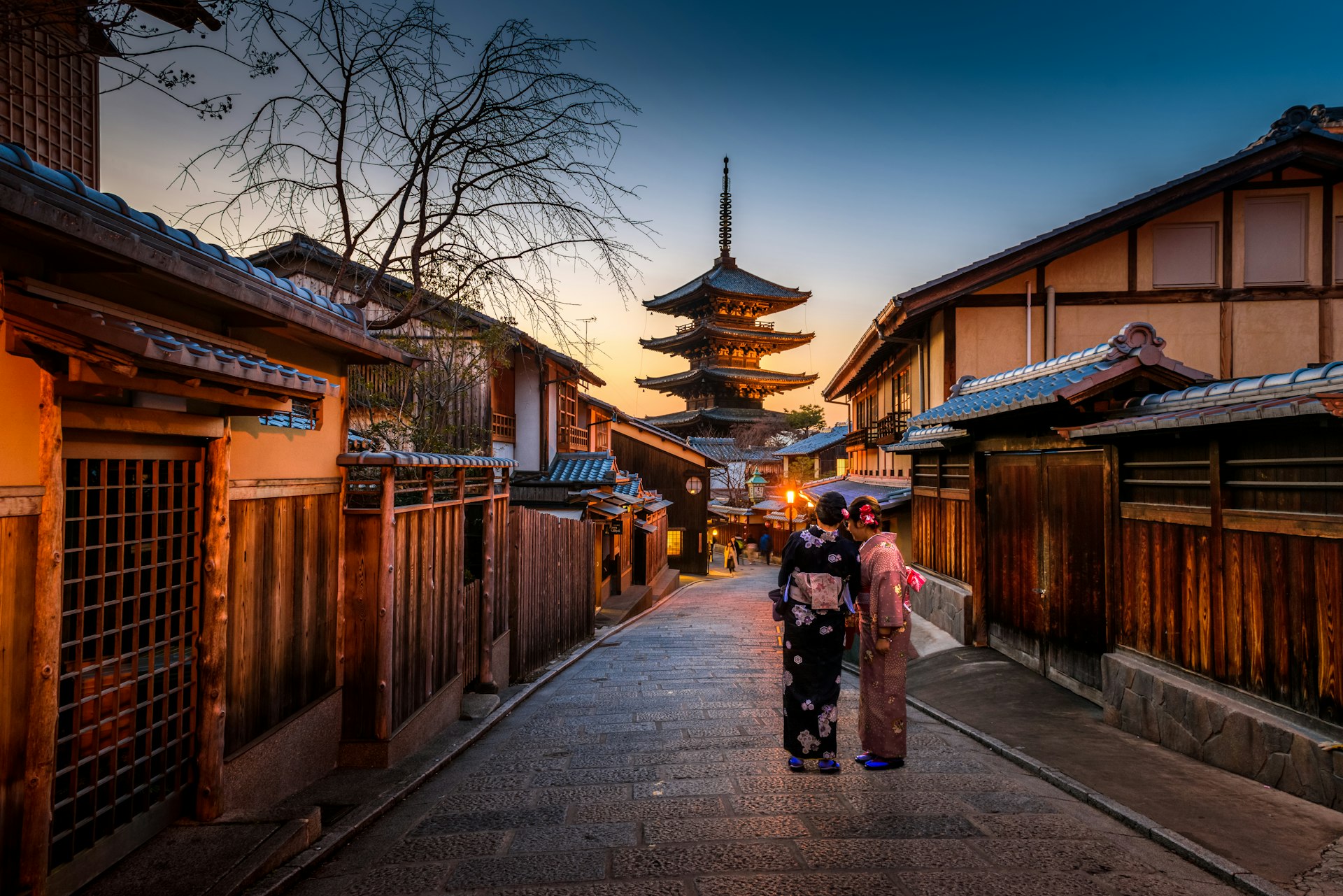
Kyoto was the capital of Japan for over a thousand years, starting when Emperor Kanmu's court settled here in 794. That long run left the city with more than a thousand shrines and temples, and with about 20 percent of Japan's National Treasures and 15 percent of its Important Cultural Properties. You feel that density on an ordinary walk: a temple gate, a stone marker, a craft workshop that has been in the same family for generations.[12]
The culture here is not only in buildings. Aristocratic culture began in the Heian period, from 794 to 1185, and later periods added flower arrangement, tea ceremony, textiles and pottery. Many of those traditions are still practiced, and some are open to visitors who plan ahead.[2],[10]
One thing to know before you arrive: many of Kyoto's attractions sit near residential areas. Your visit can affect the lives of the people who live there, so the city asks visitors to stay considerate of the local community while sightseeing.[1]
Daigoji Temple is a UNESCO World Heritage Site in the Yamashina district of southeastern Kyoto, founded in 874. Its five-storied pagoda is the oldest wooden building in Kyoto, and the temple spreads in three broad sections up the side of Mt. Daigo. The path deeper in is dotted with structures dating as far back as the 10th century, and it is a good place to stroll away from the crowds.[10]
Daigoji is filled with officially designated National Treasures and Important Cultural Properties, and its treasures are still in use rather than locked away. The Sanboin garden has stayed unchanged for 400 years, and its basic design was conceived by Toyotomi Hideyoshi himself. In autumn, the Benten-do Hall is exquisite beside the bright red of the Japanese maples.[10]
If you are in Kyoto in spring, Daigoji reenacts Toyotomi Hideyoshi's famous cherry blossom-viewing party beneath great weeping cherries, with costumed actors portraying historical figures. A temple worker says the temple is at its most picturesque in spring and early summer.[10]
Beyond Daigoji, the city's temple map is wide. Kenninji-Temple sits in the Gion & Kiyomizu area, Ninna-ji Temple in Kinugasa & Kitano, Gio-ji Temple in Saga & Arashiyama, and Higashi-Hongan-ji Temple near Kyoto Station. Yuki-jinja Shrine is in the Kurama & Kibune area.[12]
For quieter temple scenery, look at the areas around the edges of the city. The Takao Area's three mountains, known together as the Sanbi, are known for their temples and lush greenery. The Ohara Area has ancient temples, famous gardens and spacious hot springs in a relaxing rural setting. The Yamashina Area is dotted with temples known for beauty in both their modern-day appearance and their histories.[1]
The Gion Kagai Art Museum sits in the heart of the Gion district and introduces the culture of geiko and maiko. It exhibits hand-painted Yuzen kimono, Nishijin brocade obi sashes, and kanzashi hair ornaments for each season along with makeup items. It also offers live performances of traditional mai dances in the Inoue style, photo sessions with a geiko or maiko, a serene Chisen Water Garden, and an Art Café with local saké and Japanese whisky.[9]

The Kyoto City KYOCERA Museum of Art opened in 1933 in the Okazaki district and is Japan's oldest public art museum housed in its original architecture. Its classical exterior has been appreciated for more than 85 years, and a renewal by architects Aoki Jun and Nishizawa Tezzo preserved original elements while adding new designs. Nearby you will find Eikan-do Temple, Heian-jingu Shrine, Nanzen-ji Temple, Ginkaku-ji Temple and the National Museum of Modern Art, Kyoto.[4]
The National Museum of Modern Art, Kyoto (MOMAK) opened in 1986 and focuses on twentieth-century art from Japan and elsewhere, with particular emphasis on Kyoto and the Kansai area, including Japanese-style paintings of the Kyoto School. Its collection covers Japanese modern art and craft movements across every genre of the crafts.[8]
The Kyoto Museum of Crafts and Design opened in 1977 and reopened under its current name in 2020. It sits on the B1F of Miyakomesse in the Philosopher's Path & Okazaki area, near Ginkaku-ji Temple, Nanzen-ji Temple and the Philosopher's Path itself.[5]
In Arashiyama, the Fukuda Art Museum opened in 2019 and focuses on Japanese paintings, with works by Itō Jakuchū, Maruyama Ōkyo and Nagasawa Rosetsu. The gallery building is designed to resemble a traditional Japanese storehouse, and the museum café looks out over the Ōi River and Togetsukyo Bridge. The Saga Arashiyama Museum of Arts & Culture is dedicated to the Hyakunin Isshu, an anthology of classical waka poetry said to have originated in the area, and its second floor has a 120-tatami mat gallery designed to resemble a Japanese painting.[3],[6]
The Kyoto Seishu Netsuke Art Museum holds 5,000 netsuke, the small carved toggles once used to secure pouches to the sash of a robe. It was the first museum in Japan dedicated to netsuke, and its building is an Important Kyoto Cultural Property that began life in 1820 as a samurai villa.[7]
Kyoto's festival calendar runs all year, and several events in 2026 are open to visitors. The Jidai Matsuri Festival Procession sells paid viewing seats, as does the Aoi Matsuri Festival Procession. In April, many geiko and maiko come together for Haru no Odori (Spring Dances), and Aki no Odori (Autumn Dances) begin in October, when many geiko and maiko perform on stage.[1],[2],[11]
Autumn 2026 is especially full. Autumn Dance Performances by Maiko and Geiko run from 01 Oct to 18 Nov 2026 at venues throughout Kyoto. Fire Festivals in Kyoto City run from 05 Nov to 23 Nov 2026, and the Arashiyama Bamboo Light-up runs from 30 Sep to 08 Nov 2026 at Saga Tenryuji Tateishicho in Ukyo Ward. In November, as the leaves change, several gardens and temples hold special nighttime illumination events.[1],[2]
Smaller events reward a closer look. The Kongo School of Noh Theater performs on 08 Nov 2026 at the Kongo Noh Theater, and Shinsen-en Dainembutsu Kyogen takes place 07–08 Nov 2026 at Shinsen-en Temple. The Tomono-sha Festival, an archery ritual, takes place on 15 Nov 2026 at Shiramine-jingu Shrine. The Matsuri Crossing Brazilian Culture Festival runs 06–08 Nov 2026 at Higashi Hongan-ji Temple.[2]
Craft traditions are part of the visit too. Kiyomizu-yaki pottery-making in Kyoto is said to have begun in earnest around the eighth century, and over 400 years Kiyomizu pottery has developed countless techniques, with each kiln and its artisans having their own specialties. In Yamashina, Gallery Rakuchu-Rakugai displays a range of Kiyomizu pottery styles, from ceramic artwork to delicate tableware, and its second floor holds a ceramic reproduction of a National Treasure folding screen that took seven years to complete.[2],[10]
At Unraku-gama in Yamashina, visitors can see a production process that has been going on for 130 years. With a phone or email reservation in advance, purchasing customers can view the production process at the kiln. The pottery area in Yamashina is a short bus ride from central Kyoto, and visitors in late October can attend the annual ceramics festival, with food and over 100 tents of hand-crafted pieces.[10]
Sukiya-style architecture is said to have been established in the Muromachi period, from 1336 to 1573. Katsura Rikyu Imperial Villa is a quintessential example, and from the Edo period (1603–1867) onward the style was widely adopted for residences and traditional Japanese restaurants. Flower arrangement, too, was established during the Muromachi period, by a Buddhist priest of Rokkaku-do Temple.[2]

Textiles tell another neighborhood story. Nishijin textile gets its name from the western faction's headquarters during the Onin War, in present-day Kamigyo Ward, and much Nishijin cloth is made into obi as well as kimono and neckties. Yuzen comes in two basic types: tegaki (hand-painted) yuzen and kata (stencil-painted) yuzen.[2]
For a different side of the city, head to Fushimi, an inland port town with charming canals and rows of sake breweries. Western Kyoto, the Nishikyo Area, has quiet, unexplored bamboo forests and many unique cycling routes. The Keihoku Area offers farm stays that get visitors in touch with nature and agriculture.[1]
Kyoto holds the distinction of being the birthplace of Japanese cinema, and the Kyoto International Manga & Anime Fair, Western Japan's largest manga and anime trade fair, is held at Miyako Messe and other venues.[2]
Kyoto marks the year with customs you can watch or join. Hinamatsuri, the Girl's Festival, is observed on March 3. On May 5, Children's Day (also called the Boy's Festival), decorative samurai helmets and festive carp banners are displayed. Nagoshi no Harae (Summer Purification Rites) are held in June to drive away bad luck accumulated in the first half of the year.[2]
On July 7, people make wishes on colorful strips of paper for Tanabata, the Star Festival. From May through September, many diners eat at outdoor riverside platforms called noryo yuka beside the Kamo River in the city center, and kawadoko in Kibune and Takao. The Harvest Moon typically appears in September, so many Otsukimi (moon viewing) customs are practiced that month.[2]
At the end of the year, on December 31, many people gather in temples to listen to Joya no Kane (Bells for the New Year) around midnight on January 1, when large bells are rung 108 times. In the first few days of January, people go out for Hatsumode (First Visit of the Year) to wish for good luck at a temple or shrine. Setsubun on February 3 marks the end of the new year festivities.[2]
Daigoji's largest annual event, the Godairiki-san festival, is held every year on February 23rd. Protective paper charms known as Miei are distributed to festival-goers, and competitors try to lift an enormous piece of mochi for as long as they can.[10]
Some Kyoto attractions require reservations, so plan ahead. A few need a reservation regardless of the time of year or the size of your group, and others are extra busy during fall foliage and cherry blossom seasons, when the city is usually extra crowded.[1],[13]

Book the imperial villas early
Reservations for Kyoto Sento Imperial Palace, Katsura Imperial Villa and Shugakuin Imperial Villa are accepted from 5:00 AM on the first day of the month three months before your visit until 11:59 PM three days before your visit date. Slots for the Sento Imperial Palace close once all are filled.[13]
Reserve the Moss Temple
Saiho-ji Temple, popularly known as the Moss Temple, requires a reservation in addition to the other listed spots.[13]
Plan fall temple visits
Ruriko-in Temple requires advance reservations during part of its fall viewing period, which runs from October 1 to December 13 in 2026. Enko-ji Temple is reservation-only during its fall foliage period, from November 10 to December 10 in 2026, and reservations open from October 20 via the temple's website.[13]
Book the smaller gardens
The Shigemori Mirei Garden Museum can be reserved up to 10 days in advance, preferably by email. Murin-an and the Former Retreat of Iwakura Tomomi take reservations via their official websites from 30 days until one hour before your visit.[13]
Add a guided house tour
Nijo Jinya requires a reservation for an approximately one-hour guided tour led by a member of the family. Tours are conducted in Japanese, so arrange your own interpreter if needed, and reservations are accepted up to 30 days in advance and at least 30 minutes before the tour start time.[13]
Kyoto City has guidelines for everyone involved in tourism, hosts and visitors alike, and the city asks visitors to stay considerate of the local community while enjoying sightseeing. Because many attractions sit near residential areas, your actions can affect the lives of citizens.[1]
Check the weather and clothing guidance before you pack so you know what clothes will suit your trip. Tourist information spots offer Wi-Fi throughout the day, and a tourist information center can help with whatever tourism advice you need. Brochures, maps and sample itineraries are available, along with seasonal information and guidance on where to stay.[1]
For events, remember that displayed dates indicate only the start and end date, and there may be days within that period when the event is not held. Check the official website linked below each event entry for further details and the latest information. The Kyoto Autumn Leaves Calendar is a useful planning tool for fall.[1],[11]
Interpreter guides offer a local perspective and deeper insights. If you are traveling with kids, family-friendly activities can be found throughout the city. Information on barrier-free facilities and support is available, and Muslim travelers can find places to pray, lodge and enjoy halal food. Know what to do in case of an emergency, and check your transportation options and how to get to Kyoto from other spots in Japan.[1]
A new system for tax-free shopping in Japan has been introduced, and you can get cash and learn about the tax exemption system in Kyoto. You can also store luggage or have it delivered to your accommodation.[1]
For a souvenir with a story, Kyoto Benrido in Marutamachi sells art postcards and other goods made using traditional color collotype printing. Benrido was founded in Kyoto in 1887 and is the only studio in the world that still practices color collotype printing. About 200 postcard designs are displayed like an art exhibition, and you can watch the printing process through a window at the Collotype Gallery.[14]
Some do, yes. Saiho-ji Temple, known as the Moss Temple, requires a reservation, and Ruriko-in and Enko-ji Temples require them during parts of their fall viewing periods. The imperial villas take reservations from three months before your visit until three days before.[13]
Autumn Dance Performances by Maiko and Geiko run from 01 Oct to 18 Nov 2026 at venues throughout Kyoto. Fire Festivals in Kyoto City run from 05 Nov to 23 Nov 2026, and the Arashiyama Bamboo Light-up runs from 30 Sep to 08 Nov 2026.[1],[2]
Daigoji Temple in Yamashina is a UNESCO World Heritage Site founded in 874, with Kyoto's oldest wooden building, its five-storied pagoda. It spreads up Mt. Daigo and is a good place to stroll away from the crowds.[10]
The Gion Kagai Art Museum in the Gion district introduces geiko and maiko culture, with hand-painted Yuzen kimono, Nishijin brocade obi and seasonal kanzashi hair ornaments. It also offers live mai dance performances and photo sessions with a geiko or maiko.[9]
Yes. In Yamashina, a short bus ride from central Kyoto, Gallery Rakuchu-Rakugai displays Kiyomizu pottery styles, and at Unraku-gama you can view a production process that has been going on for 130 years with a phone or email reservation in advance.[10]
Many attractions are near residential areas, so your actions can affect the lives of citizens. Kyoto City asks visitors to stay considerate of the local community while sightseeing.[1]
Every rule, fee and deadline above is taken from these official pages, which we read on November 7, 2026. Rules change, so check the official page before you apply or pay.
Was this guide helpful?
Been through this recently? Share what happened, a tip, or a question for other travelers.
No comments yet. Be the first to share your experience.