
Your privacy
Essential cookies keep the site working. With your permission we also use approximate location (nearest airport, local prices), analytics, and advertising measurement. Choose
Essential cookies keep the site working. With your permission we also use approximate location (nearest airport, local prices), analytics, and advertising measurement. Choose
Travel guide
The walled city puts you inside the UNESCO-listed colonial core, Bocagrande puts you on the beach with the most tourist services, and the islands put you on the sand itself. Pick by how you want to spend your days, not by hotel name.
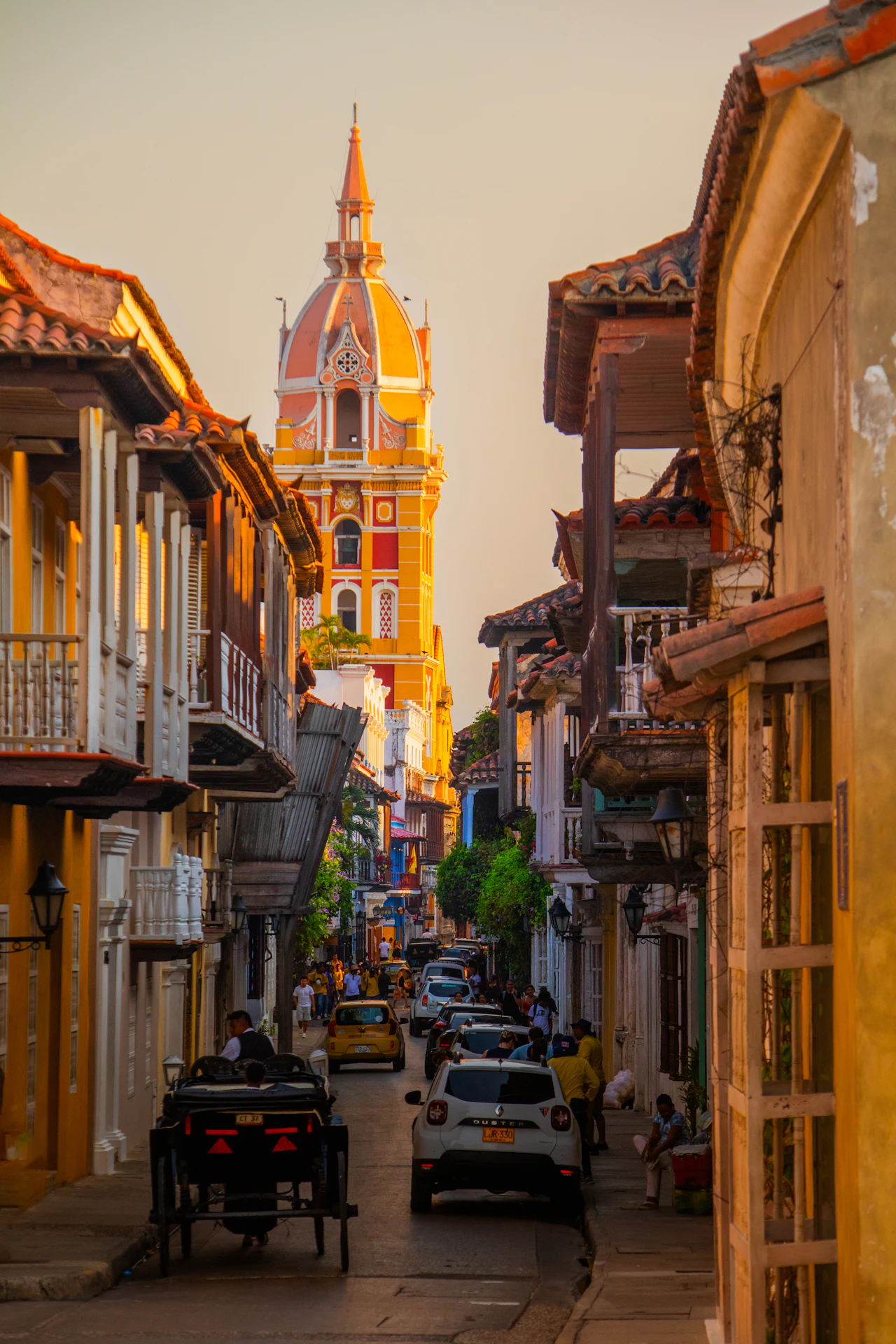
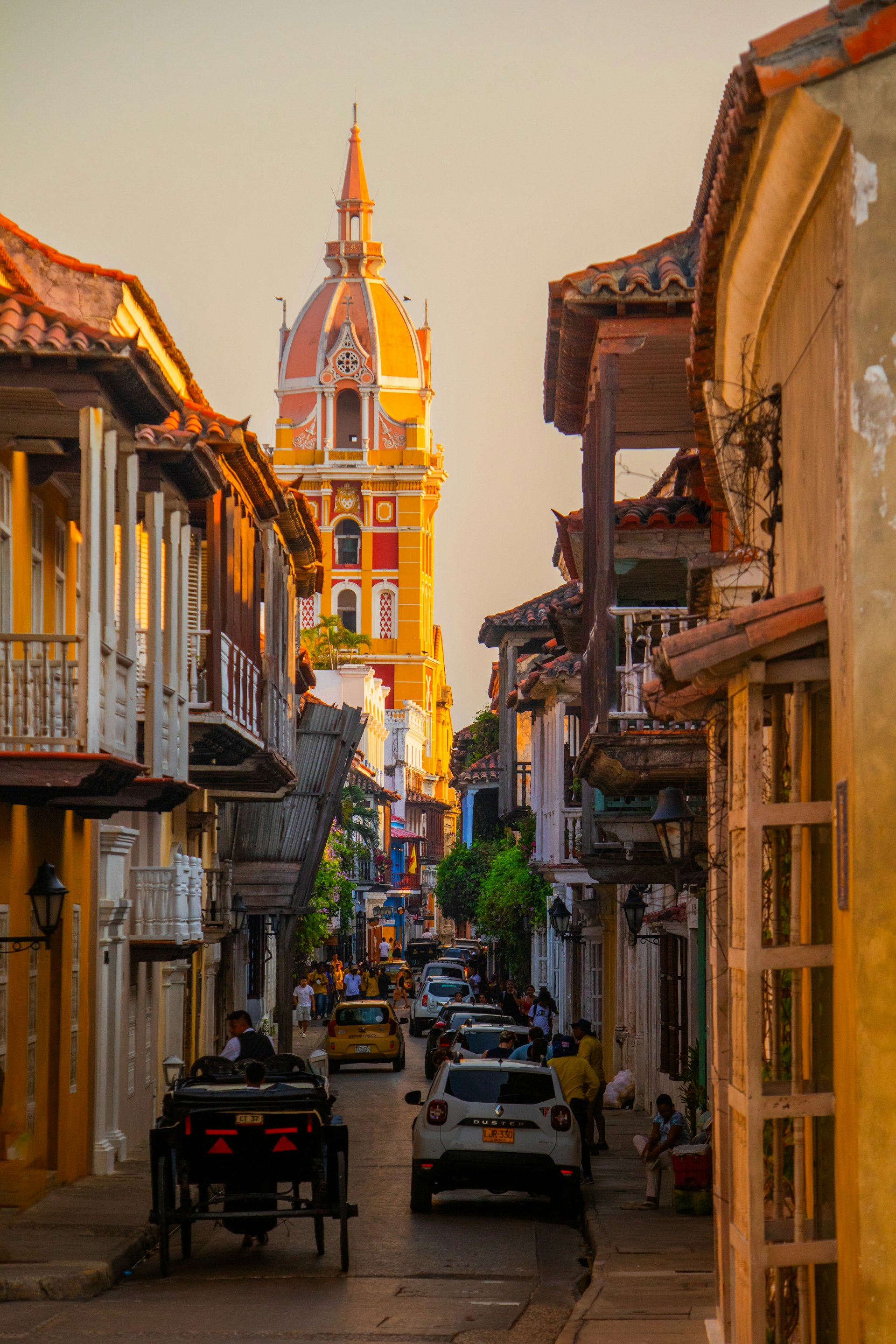
A street in the walled city of Cartagena, Cartagena
Next: the trip itself
Fly2Any travel brief
One email a week with our new guides and the fares we actually recorded on popular routes. Free, and one click to unsubscribe.
Cartagena de Indias sits on the Caribbean coast in northern Colombia and is the capital of the Bolívar region. Where you stay shapes your trip more than you might expect, because the city's main areas feel very different from one another.[1]
If you want colonial streets, churches and squares on your doorstep, stay in the walled city. If you want a wide beach, hotels, restaurants, shopping centers and nightclubs within walking distance, stay in Bocagrande. If your idea of a vacation is sand and water, base yourself on one of the islands.[1]
Wherever you stay, you will find accommodation options that range from budget hostels to traditional colonial hotels and exclusive boutique hotels. The historic center alone offers luxurious boutique hotels, rental homes and more modest accommodations.[1],[3]
Cartagena (CTG)
Live fares from your airport, for your dates. Bag fees are shown before you pay.
Cartagena's historic center is surrounded by long kilometers of old walls that make up the walled city. The Historic Center is a UNESCO World Heritage Site, and the wall around it runs eight kilometers, built in stages between 1586 and 1796.[1],[3]
Staying here means walking out into a well-preserved colonial city that makes visiting feel like traveling back in time. The architecture spans colonial, republican and modern styles, and the streets are narrow, lined with colonial houses and opening onto squares with monuments, parks, museums and colonial-era churches.[3],[4]
The walled city inspired Gabriel García Márquez, winner of the Nobel Prize in Literature in 1982, with its balconies and narrow stone paths. He said he was reborn after visiting colonial Cartagena for the first time.[1],[4]
You can walk along the city walls, stopping at each bastion to admire the views and take photos. To explore the historic center properly, you'll need at least two hours.[3]
Two squares anchor the area. Santo Domingo Square is the liveliest square in the walled city, with a sculpture by Master Fernando Botero called "Gertrudis," and it retains the colonial appearance of the city as a focal point for bars and restaurants. Santa Teresa Square is one of the busiest plazas and one of the main entrances to the walled city.[3],[4]
The Clock Tower Monument stands at the main entrance to the walled city and dates back to the early 18th century. Right next to it is the Portal de los Dulces, where you can enjoy local sweets made from the Caribbean's exotic fruits.[3],[4]
Landmarks cluster tightly here. Bolívar Park has a bronze statue by Eloy Palacios of Simón Bolívar on horseback and is surrounded by the Palace of the Inquisition, the Palace of the Proclamation and the Cathedral. The Gold Museum holds 538 gold artifacts and 61 ceramic pieces. The Church of Santo Domingo is the oldest church in the city, believed to have been started around 1550.[3]
For evenings, Santa Teresa Square has vibrant nightlife with vallenato groups performing under the moonlight, and the Hotel Charleston in the square livens up many of its evenings. At nightfall you can also tour the colonial area on a horse-drawn carriage.[1],[3]
Bocagrande is Cartagena's most touristy area, with wide beaches, hotels, restaurants, shopping centers and nightclubs. If you want to step out of your hotel onto a beach and have dinner options within a short walk, this is the area built for that.[1]

It also suits travelers who want a broad choice of places to eat. Cartagena's restaurants range from international cuisine to traditional places serving local dishes such as arroz con chipi chipi, pork loin in tamarind sauce and shrimp cream. In the old city, restaurants offer menus for every budget, from street food to fine dining.[1],[3]
The city has an important hotel and tourism infrastructure and an excellent gastronomic offering, and Bocagrande is where much of that tourist-facing side is concentrated. Cartagena is also a popular destination for weddings and honeymoons, so if that is your trip, the beachfront areas are worth considering.[1]
Beaches in the Cartagena area are suitable for sunbathing, relaxing or practicing all kinds of water sports. The main and best beaches, though, are on the islands rather than in the city itself.[1]
Cartagena has more than 5 island complexes around it providing more than 20 beaches to visit. The main and best beaches in the Cartagena area are on the Islas del Rosario, Barú, San Bernardo and Tierra Bomba.[1]
The city is surrounded by several archipelagos and islands that are true paradises for relaxation. If you want your base to be sand and sea rather than streets and squares, this is the choice.[1]
Time your stay with the weather. Late November to late April is a good time to visit Cartagena's beaches because the weather is drier and fresher thanks to the sea breeze. The climate is humid and dry tropical with a relative humidity of 84%, and temperatures are warm almost all year round, generally ranging between 73 and 86ºF.[1]
Cruises also depart from Cartagena to enjoy the landscapes of the Colombian coast, and the port is an embarkation point for ships offering onboard amenities like swimming pools, jacuzzis, gyms, bars and restaurants. If you are combining an island stay with a cruise, the port is less than four miles from the main shopping areas.[1],[2]
The walled city keeps the sightseeing close. The Castillo de San Felipe de Barajas dates back to the 17th century and is the largest military building constructed by the Spanish Crown in America. The Caribbean Naval Museum is near Santa Teresa Square, and La Serrezuela Mall is built around a restored wooden bullring with a gourmet food court and shops.[1],[3],[4]
The Cathedral Basilica Metropolitan of Saint Catherine of Alexandria is in Plaza de la Proclamación, east of Bolívar Park, and construction began in 1577. The Church of San Pedro Claver was built between 1580 and 1654 and sits in Plaza de la Aduana next to the San Pedro Claver Museum. The Historical Museum of Cartagena de Indias – Palace of the Inquisition was founded in 1924 and is housed in an 18th-century colonial building.[3]
In the old San Diego neighborhood, the Church of Santo Toribio de Mogrovejo is in Fernández de Madrid Square and has the only baroque altar of its kind in the city. Las Bóvedas, built with many arcs and domes between the Santa Clara and Santa Catalina forts, is described as the perfect place to purchase artisanal works and local antiquities.[3],[4]
From Bocagrande, you are a short ride from the old city and its sights. The port is less than four miles from the main shopping areas, and in high season about 200 cruise ships dock in Cartagena, known as "La Heroica."[2]
Wherever you stay, the Getsemaní neighborhood is worth a visit for its graffiti tour. The city also has an intense nightlife, cultural festivals and lush landscapes.[1]
Getting around Cartagena is very easy, especially by taxi, as distances in tourist areas are not very long. Travelers are advised to check taxi prices in advance to avoid problems with overcharges.[1]

From the walled city, you can explore on foot, by bicycle, by segway or by horse-drawn carriage. The colonial tour can be made on foot at any time, and trying it again at night in a horse-drawn carriage is suggested for a romantic experience.[3],[4]
If you are coming from elsewhere in Colombia, you can fly to Cartagena with Avianca, LATAM, VivaAir or Wingo, among others. Airlines such as American Airlines, JetBlue, Interjet, KLM, Delta and Copa fly directly to Rafael Núñez International Airport in Cartagena.[1]
You can also rent a car to Cartagena from cities such as Barranquilla and Santa Marta, with trips that take 2 to 4 hours. From inside Colombia you can reach Cartagena by bus from cities such as Barranquilla, Santa Marta or Bucaramanga, with journeys that take less than 10 hours.[1]
The temperature in Cartagena averages 27°C throughout the year, and it is warm almost all year round, generally ranging between 73 and 86ºF. The climate is humid and dry tropical with a relative humidity of 84%.[1]
Late November to late April is a good time to visit Cartagena's beaches because the weather is drier and fresher thanks to the sea breeze.[1]
January is ideal for enjoying cultural events such as the Hay Festival and the Festival de Música de Cartagena. The International Music Festival and the Hay Festival are held in January in Cartagena.[1]
Cartagena's International Film and Television Festival takes place in March and features free film screenings.[1]
Santo Domingo Square has hosted celebrities, athletes and European royalty, especially on New Year's Eve, so if you are in town for the holidays, expect that square to be busy.[3]
Accommodation options range from budget hostels to traditional colonial hotels and exclusive boutique hotels. The historic center offers luxurious boutique hotels, rental homes and more modest accommodations, so you can match your budget to the atmosphere you want.[1],[3]
Travellers with questions in Cartagena can go to the numerous information points in the city's tourist areas. Use them to confirm taxi prices and local advice before you commit to a day plan.[1]
Cartagena is framed by a beautiful bay and is one of the most beautiful and best-preserved cities in the Americas. Wherever you stay, build in time to walk the walls and watch the light change over the water.[1],[3]
The walled city puts you inside the UNESCO-listed historic center, with colonial houses, squares, museums and churches within walking distance. If you would rather have a wide beach and the most tourist services, choose Bocagrande instead.[1],[3]
Yes. Cartagena has more than 5 island complexes around it providing more than 20 beaches, and the main and best beaches are on the Islas del Rosario, Barú, San Bernardo and Tierra Bomba. An island base suits travelers who want sand and relaxation rather than city streets.[1]
Late November to late April is a good time because the weather is drier and fresher thanks to the sea breeze. Temperatures are warm almost all year round, generally ranging between 73 and 86ºF.[1]
Getting around is very easy, especially by taxi, as distances in tourist areas are not very long. Within the historic center you can explore on foot, by bicycle, by segway or by horse-drawn carriage.[1],[3]
January is ideal for cultural events such as the Hay Festival and the Festival de Música de Cartagena. The International Music Festival and the Hay Festival are both held in January.[1]
Bocagrande is Cartagena's most touristy area, with wide beaches, hotels, restaurants, shopping centers and nightclubs. Cartagena's restaurants range from international cuisine to traditional places serving local dishes such as arroz con chipi chipi, pork loin in tamarind sauce and shrimp cream.[1]
Plan the whole trip
Flights, hotels and tickets in one conversation with Fly2Any AI.
Start planningThe facts above come from these pages, which we read on November 26, 2026. Opening hours, prices and event dates change, so check with the venue or organizer before you go.
Was this guide helpful?
Your trip
Flights to Cartagena
Where to stay in Cartagena
Find a hotelThings to do in Cartagena
Things to do in CartagenaPlan the whole trip
Flights, hotels and tickets in one conversation with Fly2Any AI.
Start planningBeen there? Share a tip, a favorite spot, or a question for other travelers.
No comments yet. Be the first to share your experience.