Travel guide
Tokyo's best areas for first-timers, families, art lovers and budget travelers — plus what each one puts within walking distance. Choose your base by what you want to see, then check the accommodation tax and private-lodging rules before you book.
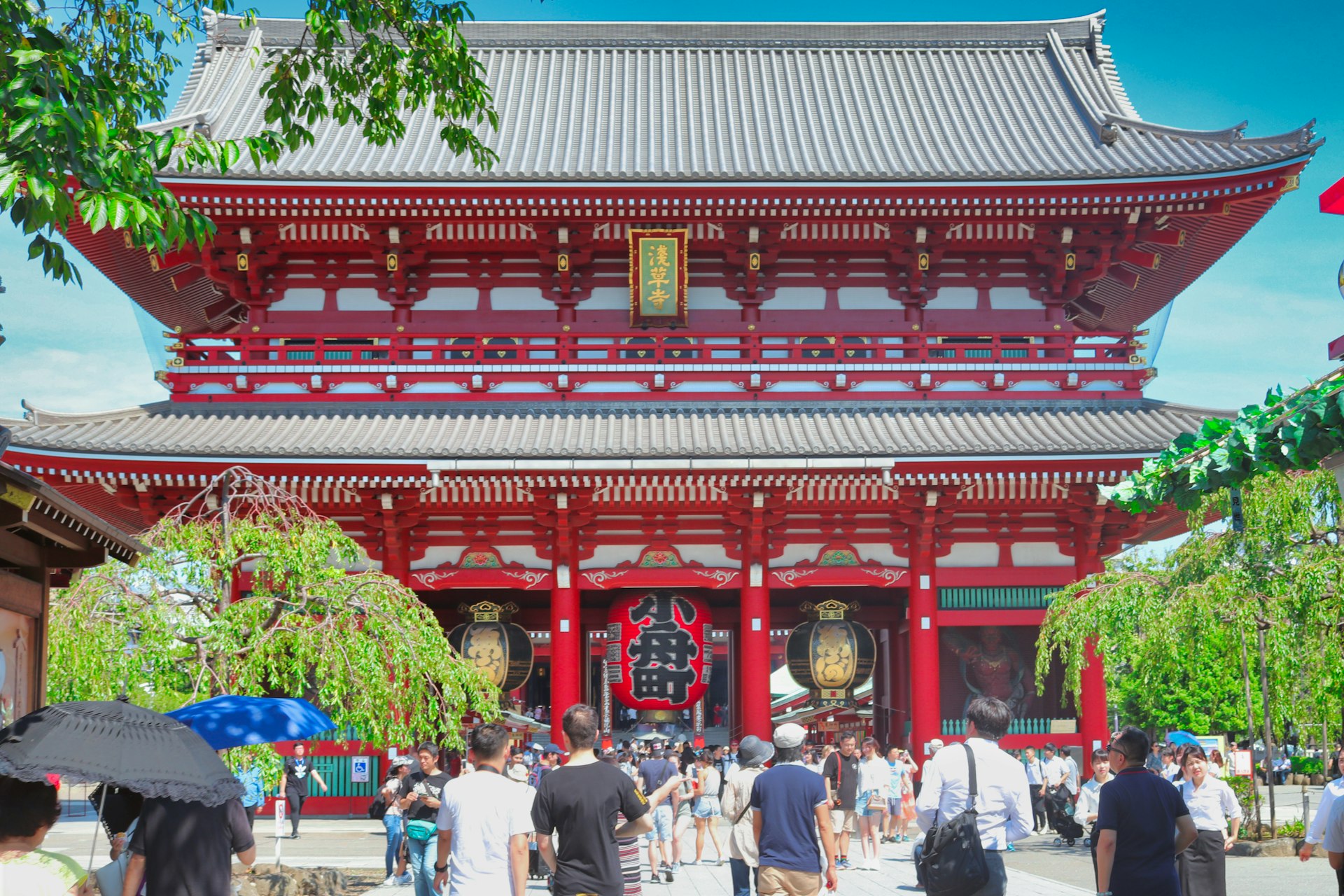
Sensō-ji's Hōzōmon gate, Asakusa, Tokyo, Tokyo
Next: the trip itself
Fly2Any travel brief
When to book, airport tricks, document changes and how to plan the whole trip. No fake fare alerts.
Tokyo is a vast metropolis home to nearly 14 million people, so where you sleep shapes your days more than in most cities. The good news is that the city offers accommodation from high-end hotels and luxury ryokan to boutique hotels and trendy hostels, so every taste and budget has an option.[2],[7]
If you want temples, old-Tokyo streets and easy access to a landmark view, base yourself in Asakusa. If you want green space on your doorstep, Shibuya puts Yoyogi Park a 20-minute walk away. If you want bay views and a waterfront feel, look at Odaiba. And if you plan to explore western Tokyo — Mitaka, Hachioji, Okutama — Shinjuku is the handiest hub.[2],[4],[5],[9]
Mid-tier and business hotels provide convenience and all the basic amenities, making them a great option for travelers who plan to spend most of their time out exploring the city. Luxury hotels in central Tokyo provide excellent 5-star service and city views, and views over the water if you stay in the Tokyo Bay area. Most of Tokyo's luxury hotels are concentrated around the Tokyo Imperial Palace, Nihonbashi, Roppongi and Asakusa areas.[7]
Tokyo Haneda (HND)
Fares we have seen from US cities. Bag fees are shown before you pay.
Asakusa is where you go for the Tokyo of postcards. Sensoji Temple is in Asakusa, and from there it is a short trip to TOKYO SKYTREE for great views of the city. Staying here puts a major temple and a sky-high viewpoint in the same day, without a long commute.[2]

The area also suits travelers who want a luxury stay with a sense of place: Asakusa is one of the areas where most of Tokyo's luxury hotels are concentrated, alongside the Tokyo Imperial Palace, Nihonbashi and Roppongi.[7]
Nearby, Ueno Park houses many museums, including the Tokyo National Museum, which has a great selection of art and artefacts. Ueno Park also offers a pond where you can spot turtles or carp along with many family activities, and Ueno Zoo houses animals from all over the world such as elephants, giraffes, and hippos. That makes Asakusa a strong base for museum days and for families.[2]
If you like markets, Ameyoko is a market-like street full of cheap goods and street food. Akihabara is famed for its electronics stores and otaku culture, so it's a must-see for manga and anime fans.[2]
Shinjuku works as a base because so much of western Tokyo connects through it. From Shinjuku Station it takes around fifteen minutes on the Chuo Line Special Rapid to Mitaka Station. From Shinjuku Station, Hachioji is about 40 minutes on the JR Chuo Line-Limited Express. And from Shinjuku Station, travelers take the JR Chuo Line to Tachikawa and transfer to the JR Ome Line for Okutama Station, with a travel time of around two hours.[4],[5],[9]

The Ghibli Museum is the official museum of the Studio Ghibli animation studio, and the building was designed by Hayao Miyazaki himself. Travelers must book Ghibli Museum tickets ahead of time because tickets go fast — so if this is your reason for choosing Shinjuku, book before you book the room.[4]
Closer in, Shinjuku Gyoen National Garden and Hama-rikyu Gardens are beautiful places to stroll with friends. The area is also a good fit for solo travelers: many Tokyo restaurants offer counter seats perfect for those dining alone, and ramen is a cheap option, with chain store Ichiran famous for its solo dining booths.[2]
For a night out, an izakaya is a Japanese-style pub with small dishes shared by the whole table. In Yurakucho you can visit small izakaya bars or yakitori stores under the archways.[2]
A 20-minute walk takes you from Shibuya to Yoyogi Park, one of Tokyo's best green spaces. In April you can enjoy the cherry blossoms at popular spots like Yoyogi Park or Nakameguro, which makes a Shibuya base especially appealing in spring.[2]

Tokyo has many hotels focused on art and design, and some host social events. For a view, Tokyo City View at Roppongi Hills offers a great view of the city, and you can get a birds' eye view of the city from Tokyo Tower.[2],[7]
For a quieter garden stop, the Nezu Museum garden cafe was designed by Tokyo Olympic stadium architect Kengo Kuma. It is the kind of small, specific pleasure that rewards staying central rather than far out.[2]
Odaiba is a popular spot for couples, with a waterfront and views over the bay and Rainbow Bridge. New developments out on Tokyo Bay and along the city's waterfront areas pay homage to this history and are fast becoming some of the hottest new neighborhoods.[2],[6]

There is plenty to fill a day here. Miraikan, the National Museum of Emerging Science and Innovation, is located in Odaiba and offers fun for all age ranges. The Tokyo Aqua Symphony, a fountain facility that will become a new landmark in Odaiba, opens on Mar 28, 2026 — worth timing a stay around if it appeals.[1],[2]
If you want a water view from your room, this is the area to choose: luxury hotels in central Tokyo provide excellent 5-star service and city views, and views over the water if you stay in the Tokyo Bay area.[7]
Cruise operators in Tokyo offer waterfront sightseeing experiences, and Suitown Tokyo is a website offering cruise booking services and waterfront sightseeing information, allowing visitors to casually enjoy Tokyo's waterfront by boat.[6]
Ginza is one of Tokyo's retail meccas for all the large brands. Tokyo offers high-end retail and quirky fashion, Michelin-star dining and hidden cafes, modern skyscrapers and tiny shrines — and Ginza and Roppongi put much of that within walking distance.[2]
Roppongi is also where you will find Tokyo City View at Roppongi Hills, which offers a great view of the city. In the fall, an art festival across Roppongi, featuring exhibitions, performances, and creative experiences, takes place on Oct. 31 and Nov. 1.[1],[2]
Most of Tokyo's luxury hotels are concentrated around the Tokyo Imperial Palace, Nihonbashi, Roppongi and Asakusa areas, so Roppongi is a natural choice if you want five-star service and a central address.[7]
For a change of pace, in Yurakucho you can visit small izakaya bars or yakitori stores under the archways.[2]
If your trip is about a specific place rather than the city center, staying west can make sense. Mitaka and the surrounding areas are reached from Mitaka Station, on the Chuo and Sobu lines. From Shinjuku Station it takes around fifteen minutes on the Chuo Line Special Rapid to Mitaka Station, and from Tokyo Station it takes around thirty-five minutes on the Chuo Line Special Rapid.[4]
Mitaka is Ghibli country. The Mitaka no Mori Ghibli Museum is the official museum of the Studio Ghibli animation studio, and the building was designed by Hayao Miyazaki himself. Original short animated films are shown monthly in the Saturn Theater at the Ghibli Museum, and the museum's special exhibitions change yearly. Inokashira Park is a twenty-minute walk (or short cab ride) from Mitaka Station, has about 500 cherry trees and is a great spot for cherry blossom viewing in spring, and visitors can rent a row boat, paddle boat or swan boat there.[4]
Tachikawa and neighboring Kunitachi are located 30 minutes west of Shinjuku Station. Showa Kinen Park is Tokyo's biggest park, with broad flower fields, a Japanese garden, cycling paths, paddleboats, and children's playgrounds. During pleasant weather, visitors can spend a full day at Showa Kinen Park relaxing and picnicking on the grounds.[8]
Hachioji is a western Tokyo suburb about one hour from downtown Tokyo, surrounded on three sides by mountains, including Mt. Takao (599 m) and Mt. Jinba (855 m). Mt. Takao is described as the best place for a hike near Tokyo and makes for a great day trip, and because of the cable car, chairlift and trails, everyone including children, older people and companions less keen on mountain treks can enjoy Mt. Takao.[9],[10]
Okutama is an easy daytrip from central Tokyo and an ideal spot for summer camping. Hot springs are scattered throughout the Okutama area, so visitors can take a day trip, stay overnight, or go camping. Unique accommodation options outside the city include camping cabins and glamping.[5],[7]
Tokyo's rail network is how you will move, and the area you pick decides which lines you use. From Mitaka Station, the Chuo and Sobu lines are your access point. From Shinjuku Station, the Chuo Line Special Rapid reaches Mitaka in around fifteen minutes. From Tokyo Station, the Chuo Line Special Rapid reaches Mitaka in around thirty-five minutes.[4]
For western day trips, the access points matter. The access point for Tachikawa and the surrounding area is Tachikawa Station on the JR Chuo Line, Ome Line, and Nanbu Line. The access point for Hachioji is Hachioji Station on the JR Chuo, Yokohama, and Hachiko lines. The access point for Mt. Takao and the surrounding area is Takaosanguchi Station on the Keio Line. The access point for Okutama is Okutama Station on the JR Ome Line.[5],[8],[9],[10]
If you are coming straight from the airport, the trip to western areas is long enough to plan. From Haneda Airport it takes around one hour fifteen minutes by train to Mitaka Station. From Narita Airport it takes around two hours by train to Mitaka Station. From Haneda Airport, Hachioji is about one hour 30 minutes by train, and from Narita Airport, Hachioji is about two hours and 15 minutes by train.[4],[9]
The official Tokyo travel site offers guidance on getting around Tokyo, and it lists tourist information centers in Tokyo — useful when you want a human answer rather than an app.[1]
In Tokyo, an Accommodation Tax may be levied if the room charge is 10,000 or more per person per night. Tokyo's Accommodation Tax revenue is allocated to expenses to develop Tokyo as an attractive international city and to promote its tourism. Check whether your rate includes it before you compare prices.[7]
Budget travelers can find many hostels and guest houses in Tokyo that provide both safety and comfort, and some of the newly built hostels in Tokyo have been awarded for their design. Tokyo also has capsule hotels, some of which are women-only.[7]
Private lodging in Japan, also known as "minpaku", refers to accommodation facilities operated in individual apartments or detached houses. Many illegal private accommodations in Japan are run without the necessary permits and notifications. Illegal private lodgings may look appealing and may even be listed on reputable booking sites, but staying at them carries risks.[7]
Check the terms and house rules
If you plan to stay at private lodging in Japan, first check whether the terms of use (such as the cancellation policy) and house rules are provided in advance.[7]
Look for a registration or permit number
If you plan to stay at private lodging in Japan, check whether a registration or permit number is listed. A private lodging facility registered or permitted in Tokyo has a registration number beginning with "M13" (e.g., No. M13000000). A private lodging facility permitted in Tokyo has a permit number that combines numbers with characters such as kanji or hiragana (e.g., 99西保生き第 999号).[7]
Ask the facility directly
Registration or permit information is not always listed on websites, so if in doubt, contact the facility directly to check.[7]
Know the risks
Risks of using illegal private accommodation include sudden cancellations before arrival or even during your stay, inadequate fire safety equipment and other safety or hygiene issues, and a lack of contact information to turn to for help in an emergency and conflicts with local residents.[7]
Asakusa is a strong first base: Sensoji Temple is there, and from Asakusa it is a short trip to TOKYO SKYTREE for great views of the city. Ueno Park's museums, zoo and pond are nearby too, so you can fill several days without long rides.[2]
Look at Mitaka or Shinjuku. From Shinjuku Station it takes around fifteen minutes on the Chuo Line Special Rapid to Mitaka Station, and the Ghibli Museum is the official museum of the Studio Ghibli animation studio. Book Ghibli Museum tickets ahead of time because tickets go fast.[4]
Yes. Odaiba is a popular spot for couples, with a waterfront and views over the bay and Rainbow Bridge. Miraikan, the National Museum of Emerging Science and Innovation, is located in Odaiba and offers fun for all age ranges, and if you stay in the Tokyo Bay area you can get views over the water from a luxury hotel.[2],[7]
In Tokyo, an Accommodation Tax may be levied if the room charge is 10,000 or more per person per night. The revenue is allocated to expenses to develop Tokyo as an attractive international city and to promote its tourism. Check your booking terms so you know whether it is included.[7]
Check whether a registration or permit number is listed. A private lodging facility registered or permitted in Tokyo has a registration number beginning with "M13" (e.g., No. M13000000), and a permitted facility has a permit number that combines numbers with characters such as kanji or hiragana (e.g., 99西保生き第 999号). If in doubt, contact the facility directly to check.[7]
Risks include sudden cancellations before arrival or even during your stay, inadequate fire safety equipment and other safety or hygiene issues, and a lack of contact information to turn to for help in an emergency and conflicts with local residents. Illegal private lodgings may look appealing and may even be listed on reputable booking sites, but staying at them carries risks.[7]
It depends on your days. Staying central keeps you near Tokyo's high-end retail and quirky fashion, Michelin-star dining and hidden cafes, modern skyscrapers and tiny shrines. Staying west suits specific plans: Tachikawa and neighboring Kunitachi are located 30 minutes west of Shinjuku Station, and Showa Kinen Park is Tokyo's biggest park.[2],[8]
Every rule, fee and deadline above is taken from these official pages, which we read on November 1, 2026. Rules change, so check the official page before you apply or pay.
Was this guide helpful?
Your trip
Flights to Tokyo
Real fares for your dates, with bag fees shown before you pay.
Been through this recently? Share what happened, a tip, or a question for other travelers.
No comments yet. Be the first to share your experience.